

The thinking behind the system.
Prof. Dr. Fredmund Malik
Most management fashions age badly. They look clever for a few years, then reality exposes them. Malik's work has done the opposite. The more complex and unstable organisations have become, the more his ideas have held.
A Pioneer of Management Cybernetics
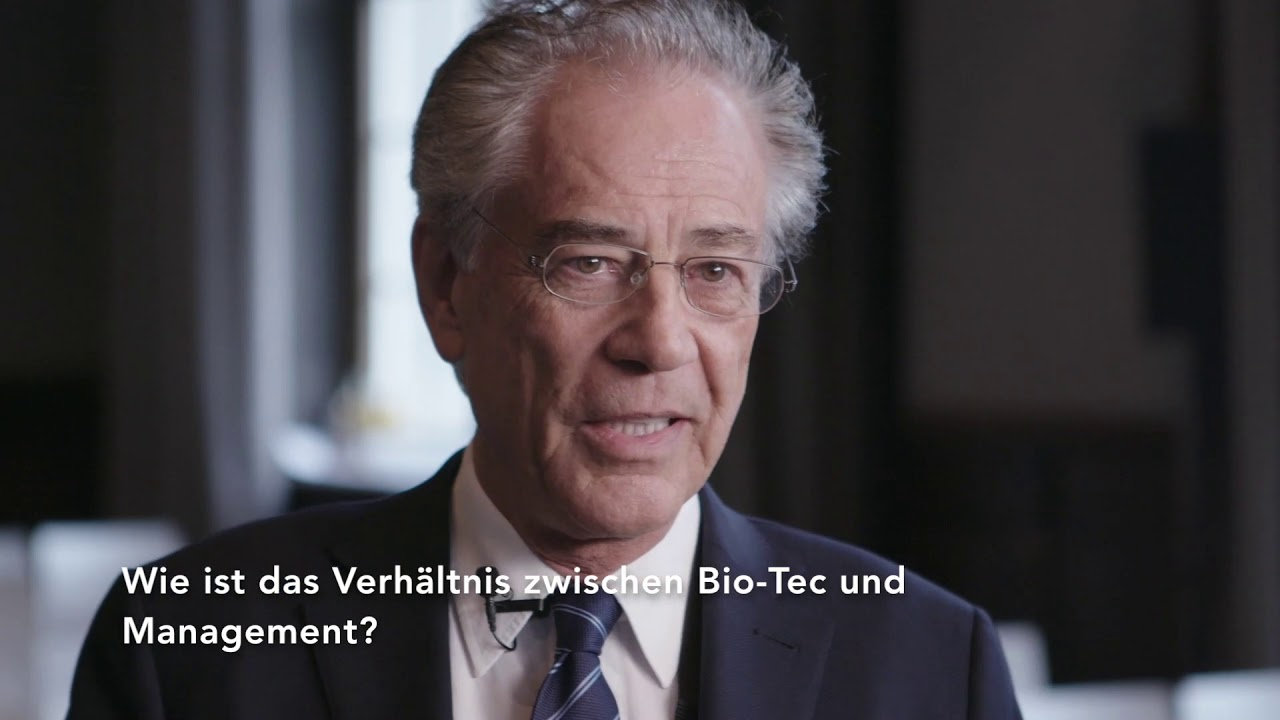
For over forty years he has looked at companies, administrations and institutions as viable systems. That lens is the backbone of the Malik Management System and the reason our tools still work when the environment stops behaving.
Stafford Beer founded management cybernetics as a science. Fredmund Malik became one of
its great pioneers in practice. He took cybernetics, systems theory and serious
management experience and built a body of work that places him among the leading
management thinkers in Europe and beyond. His basic move was simple and uncomfortable:
lead an organisation according to the same principles that make complex systems viable,
not according to this quarter's management fashion.
“Right and good management denotes the function of society that enables its organizations and systems to function in a right and good manner.”
Prof. Dr. Fredmund Malik
Management
Cybernetics:
A Framework Built
for Complexity

Most classic management concepts were invented in relatively stable environments: slower markets, fewer disruptions, longer cycles. Malik started from where leaders actually find themselves now. Overlapping crises, time pressure, information overload and decisions that refuse to be linear. Since 1997 he has called this shift from an Old World to a New World the Great Transformation21.
His framework rests on three sciences of
complexity. Systemics, the study of
coherent entities. Cybernetics, the study
of functioning systems. Bionics, which
applies nature's evolutionary solutions to
human organisations. Together they answer
very practical questions: What information
does a leadership system really need? Where
should decisions sit?
How do you organise feedback so the organisation corrects itself before damage is irreversible? What does every manager need, everywhere and always? What are the essential variables of effective management?
The aim is not to make complexity "go away". It is to use it as an asset. A complex organisation, steered with the right principles and feedback, can be far more resilient and productive than any strictly optimised hierarchy.
His Grundsätze wirksamer Führung (principles of effective leadership) distil decades of work with boards and top teams into six principles that hold across industries and cultures. Führen Leisten Leben (published in English as Managing Performing Living) was voted one of the 100 best business books of all time because it talks about the real work of managing and leading, including the personal strain and paradoxes, instead of selling another technique.
From boardrooms in Zurich to ministries in Southeast Asia, Malik's thinking has changed how leaders structure responsibilities, design their organisations and decide how to act when everything cannot be measured.

The Malik Management System
Malik sees management as a societal and evolutionary operating system for organisations. The comparison is his own. Only the right operating system lets a computer function. The central nervous system keeps an organism going. The Malik Management System does the same for organisations of every kind and size.
It is built on a strict idea: necessary and sufficient. What is the minimum set of roles, functions, feedback loops and instruments you need so the leadership system actually works under stress, and what can you safely leave out?
For leaders, this means clear responsibilities instead of power fog, decision paths that are known, and information flows that match the speed and complexity of the real world, not a reporting calendar. It is not a promise of ease. It is a promise of honest control.
Malik holds that command of right management and self-management matters as much for people in the 21st century as reading and writing have since the 18th. Management, in his definition, is the profession of effectiveness in a society of organisations. Inside Malik, this is not a metaphor. We use the system ourselves: for how we structure client engagements, how we design Syntegration processes, how we run the Malik Academy and how we organise our own work.

The Malik Systems
at Work
Malik's work is not parked in an archive in St. Gallen. On any given day, some part of it is being tested in a real system: a company navigating a strategic shift, a public institution under political pressure, a cross-sector coalition trying to move faster than its bureaucracy.
Over more than thirty books, published in more than twenty languages, he has built a coherent body of management science that is conceptually tough and relentlessly practical. More than 1,000 Syntegration applications around the world have put his ideas about collective intelligence and alignment through enough pressure tests to separate theory from wishful thinking.
The Malik Letter has been a running commentary on how management cybernetics applies to everything from digital disruption to demographic shifts and governance failures.
The Malik Institute in St. Gallen is still the centre of this work: refining the Malik Management System, applying it in real organisations, and preparing the next generation of leaders and consultants to work with complex systems in a disciplined way rather than with slogans.
“Right and good management enables organizations to function and
Prof. Dr. Fredmund Malik
people to thrive.”